
Zimbabwe is Facing a GBV Crisis
With intimate-partner killings renewing calls for action, the country must turn its laws, national strategies and development partnerships into effective protection for women at risk.

The killing of Midlands State University student Lisedi Nkomo in Gweru is more than an isolated tragedy. It is a stark reminder of the deadly consequences of gender-based violence (GBV) in Zimbabwe and a test of whether the country's institutions are doing enough to protect women before violence turns fatal.
Nkomo, 25, a fourth-year Psychology student, was allegedly shot dead at a boarding house in Senga, Gweru, on October 8 by her former husband, Godknows Muleya, 30. The Zimbabwe Republic Police (ZRP) later confirmed that Muleya was found dead at a guest lodge in Chiredzi on October 10, with investigations underway to establish the circumstances of his death. The shooting reportedly left other students traumatised, while a child was left without a mother.
The death has reignited national concern over violence against women and raised difficult but unavoidable questions about prevention, protection and accountability. As another family mourns and another community struggles to comprehend a life cut short, attention is once again turning to whether warning signs are being recognised early enough and whether existing systems are capable of preventing such deaths.
The case has added to a growing number of reported domestic-violence tragedies across the country. In Parliament, the chairperson of the Portfolio Committee on Women Affairs, Community and Small and Medium Enterprises Development, Hon. Getrude Mutandi, cited the deaths of engineer Martin Muduva and his wife, Lyliosa Chirara, as well as Nyasha Mhungu and his wife, Olga Muzhingi, in Harare, as examples of the urgency of the problem.
In September, reports emerged of several women who died in alleged attacks linked to domestic disputes. In Harare, Zvikomborero Tari was allegedly strangled by her husband on September 17 following a dispute over alleged infidelity. In Mukumbura, Mashonaland Central, Nollent Sinosi, 36, was allegedly killed with an axe by her husband on September 22 after a dispute involving allegations of infidelity. In Tsholotsho, Anita Ndlovu died on September 15 from severe burns sustained in an alleged attack by her husband in May.
These deaths are a stark reminder that preventing violence against women must become a national priority.
While the circumstances differ and allegations must be determined through the legal process, the cases have renewed concern about the risks women face within intimate relationships, particularly during and after separation. They also expose a troubling reality: violence often escalates over time, raising questions about whether opportunities for intervention are being missed before situations become fatal.
Research from different contexts has consistently shown that women may face heightened risks when attempting to leave abusive relationships. Threats, intimidation, coercive control and retaliatory violence can intensify during separation, underscoring the importance of accessible protection mechanisms, early intervention and coordinated institutional responses.
Nkomo's death represents the most extreme outcome of a broader pattern of violence affecting thousands of women and girls across Zimbabwe. The cases that capture national attention are often only the visible tip of a much larger crisis unfolding in homes and communities across the country.
Zimbabwe recorded 7,061 sexual and GBV cases in the first quarter of 2026, according to figures presented by the National Prosecuting Authority of Zimbabwe (NPAZ). Prosecutors secured 3,776 convictions during the period, while 1,961 cases remained pending at the end of the quarter. Physical abuse and domestic violence accounted for 3,505 cases received, resulting in 2,021 convictions, according to the reported figures.
The figures expose the scale of a crisis that continues to place thousands of women at risk while placing significant pressure on institutions responsible for protection, prosecution and survivor support. Yet they reveal only part of the picture. They do not represent a count of women killed by intimate partners, nor do they capture every incident of abuse that goes unreported.
The 2023-2024 Zimbabwe Demographic and Health Survey found that 27 per cent of women aged 15 to 49 had experienced physical violence since age 15, while 9 per cent had experienced sexual violence in their lifetime.
Meanwhile, the Zimbabwe Gender Commission, citing Zimbabwe Republic Police figures, reported that 13,838 cases of sexual offences and aggravated domestic violence were recorded nationwide in 2024. The Commission warned that some domestic disputes had escalated into grievous bodily harm, murder and suicide. Although the figure does not represent a count of femicide, it highlights the scale of reported sexual offences and severe domestic violence requiring intervention.
One of the most significant obstacles to understanding the full extent of intimate-partner killings is the absence of a comprehensive national femicide database. A dedicated system that consistently tracks women killed by current or former partners, previous reports of abuse, protection orders and case outcomes would provide a clearer picture of risk factors and trends.
Without reliable and comparable data, it remains difficult to establish a definitive national total of intimate-partner killings in 2026 or determine whether such deaths are increasing over time. As a result, policymakers and institutions are often left responding to individual tragedies without a complete understanding of the broader patterns driving them.
The recent killings have prompted renewed calls for action from national institutions.
Chairperson of the Parliamentary Portfolio Committee on Women Affairs, Community and Small and Medium Enterprises (SME) Development in Zimbabwe's Parliament Hon. Gertrude Mutandi has urged authorities to move beyond reacting to violence after it occurs and invest more heavily in community-level prevention, counselling, referral systems and the capacity of first responders. “The effects are no longer hidden, they are visible and in some cases deadly. We can no longer afford to look away,” she said, according to a report by The Herald.
She also questioned whether adequate resources were being invested to make existing laws and policies work where they matter most. “By the time a case involving serious violence or homicide reaches the criminal justice system, an opportunity to prevent the harm may already have been lost,” she said.
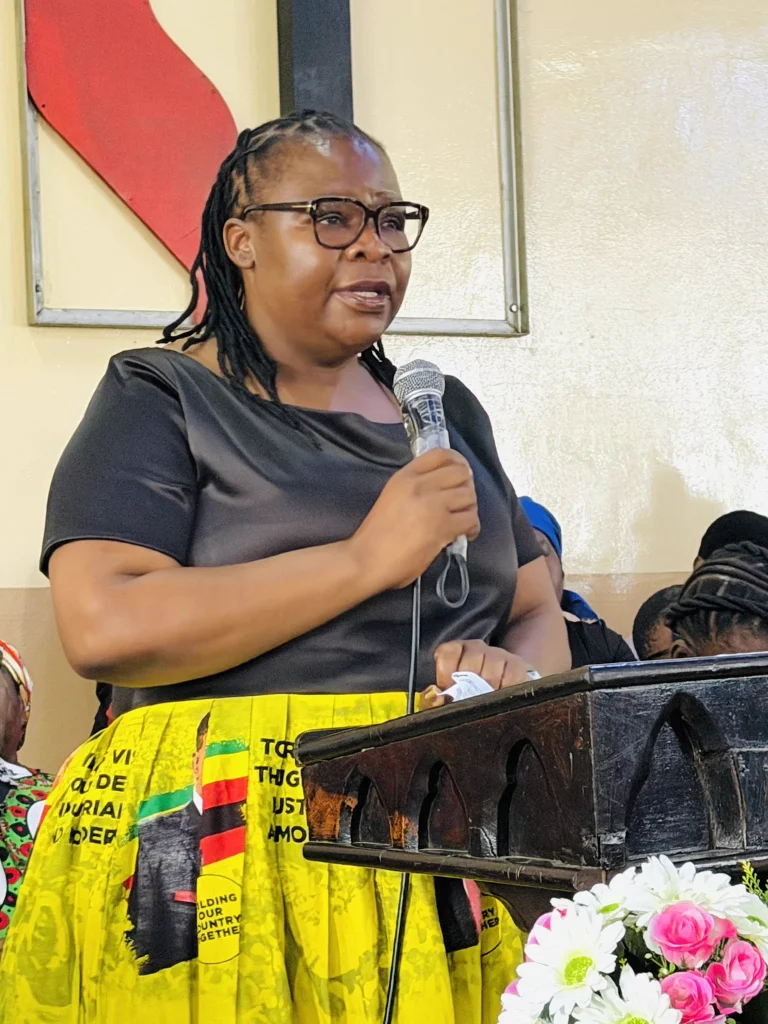
Photo: Hon.Getrude Mutandi X
Her remarks underscore a reality Zimbabwe can no longer afford to ignore. Criminal prosecution remains essential, but it occurs after irreversible harm has already been done. The greater challenge is ensuring that warning signs trigger timely intervention before violence escalates into serious injury or death.
The ZGC has also launched a 90-day national campaign against intimate-partner violence, running from October to December 2026 and culminating in the 16 Days of Activism Against GBV. Commission chairperson Dr Leslie Ncube said the reported escalation of violence within intimate relationships, including cases ending in loss of life, was deeply concerning.
“The Commission is deeply concerned by the increasing reports of physical, sexual, emotional and other forms of violence occurring within intimate relationships, including cases that escalate into loss of life,” Ncube said.
The campaign seeks to shift the national conversation from responding to violence after it occurs towards prevention, early identification of warning signs, healthy relationships, peaceful conflict resolution, reporting and institutional accountability. Its activities include public awareness, engagement with men and boys, collaboration with traditional and faith leaders, and efforts to promote supportive and safe workplaces.
The campaign is significant because it creates an opportunity to mobilise communities before the annual 16 Days of Activism Against GBV campaign, rather than limiting prevention efforts to a single period on the calendar. Sustained engagement is essential if awareness is to translate into behavioural change and stronger community protection mechanisms.
Laws are in Place, but Implementation Remains the Real Test
Zimbabwe has a substantial legal and policy framework designed to protect women and hold perpetrators accountable.
Section 52 of the Constitution protects every person's right to personal security and freedom from violence, including violence from private sources. Section 25 requires the State to take measures to prevent domestic violence, while Section 56 guarantees equality and non-discrimination.
The Domestic Violence Act [Chapter 5:16] provides a framework for protection against abuse within domestic relationships, including access to protection orders. The Criminal Law (Codification and Reform) Act provides the basis for prosecuting offences such as murder, rape and other sexual crimes.
These laws are complemented by the National Strategy to Prevent and Address GBV, 2023-2030. The strategy aims to reduce the prevalence of GBV and harmful practices by 30 per cent by 2030, with priorities including prevention, early identification, accessible survivor services, institutional capacity, improved data and adequate funding.
Zimbabwe's High-Level Political Compact on Ending GBV and Harmful Practices, covering 2021-2030, also brings together government, development partners, civil society and other stakeholders around commitments to strengthen prevention, protection and accountability.
The country is further bound by regional and international commitments, including the Convention on the Elimination of All Forms of Discrimination Against Women, the Maputo Protocol and Sustainable Development Goal 5 on gender equality.
Yet legislation alone does not guarantee protection. A woman facing threats needs more than legal provisions on paper. She needs effective and timely access to services, responsive institutions and confidence that her concerns will be treated with urgency.
Zimbabwe's national GBV strategy itself identifies persistent obstacles, including inadequate funding, weak accountability mechanisms, limited institutional capacity, poor coordination and insufficient public awareness of available services.
The latest cases have therefore shifted attention from legislation itself to the effectiveness of implementation. The central question is no longer whether Zimbabwe has laws and policies in place. It is whether women facing threats can access protection quickly enough, whether reports are acted upon decisively and whether institutions have the capacity and resources to intervene before violence escalates.
Strengthen of Survivor Services
Significant investments have been made to strengthen Zimbabwe's response to GBV. However, the persistence of serious violence against women demonstrates that prevention, survivor support and accountability must remain national priorities.
In June 2026, the Ministry of Health and Child Care, working with the United Nations Population Fund (UNFPA) and supported by the Health Resilience Fund, launched revised National Clinical Guidelines on the Care and Management of Survivors of Sexual Violence. The guidelines aim to standardise survivor care across health facilities, strengthen confidentiality and dignity, and improve coordination between health services, police, social welfare and justice institutions.
UNFPA reported that, in 2025, its supported static and mobile centres provided direct services to 7,723 survivors and reached another 17,327 people through community awareness activities. Its programme also supports one-stop centres where survivors can access multiple services without having to navigate disconnected systems.
The United Nations has also supported Zimbabwe through the Spotlight Initiative, a European Union-UN partnership implemented between 2019 and 2023. The programme supported legal and policy reform, institutional capacity, survivor services and community-based prevention. Building on those efforts, the Sustaining the Gains: Strengthening Accountability to Gender Equality and Women's Rights in Zimbabwe initiative brings together UN Women, UNICEF, UNFPA and UNDP with government partners and development partners to strengthen accountability, planning and financing for gender equality.
At a national GBV symposium in 2025, Former UN Resident and Humanitarian Coordinator Edward Kallon called for commitments to be translated into concrete action. “We must recommit, act, invest and maintain solidarity,” Kallon said, urging stakeholders to translate solidarity into enforced laws, allocated budgets and transformed communities.
That message remains highly relevant as Zimbabwe approaches the 2026 16 Days of Activism Against GBV campaign. Effective prevention requires more than awareness campaigns and public commitments. It requires sustained investment, capable institutions, accessible services and measurable accountability for results.
16 Days of Activism: From Commitments to Action
The 2026 16 Days of Activism Against GBV campaign will run from November 25 to December 10 under the theme 'UNiTE to End Violence Against Women and Girls: Ensure Justice, Protect Survivors, End Impunity.' The theme places justice, survivor protection and accountability at the centre of the response.
For Zimbabwe, these priorities must translate into practical action. That means ensuring reports of abuse are investigated promptly, protection orders are enforced, survivor services are accessible and institutions are equipped to respond effectively. It also means strengthening coordination between communities, social services, law enforcement agencies, health systems and the courts so that women at risk do not fall through the cracks.
Government institutions, Parliament, the police, courts, health services, civil society, development partners and communities all have a role to play. Men and boys must also be engaged in challenging possessiveness, coercion and the normalisation of violence within relationships.
There is also a pressing need for greater transparency and accountability. The Government and its partners should publish regular, comparable data on intimate-partner killings, previous reports of abuse, protection orders, investigations and case outcomes. They should also report transparently on the implementation and financing of the national GBV strategy, including progress towards its 2030 reduction target.
Zimbabwe has made substantial commitments to ending gender-based violence. The challenge now is ensuring those commitments translate into meaningful protection for women and girls before violence becomes fatal. Every woman should be able to leave a relationship without fearing for her safety. Every survivor should be able to seek help without shame, stigma or barriers to justice. Every credible warning of violence should be treated as a potential opportunity to prevent irreversible harm.