
16. March 2026
International Women’s Day 2026: Why Access to Justice Is Critical for Women and Girls in Zimbabwe
By Getrude Chigerwe
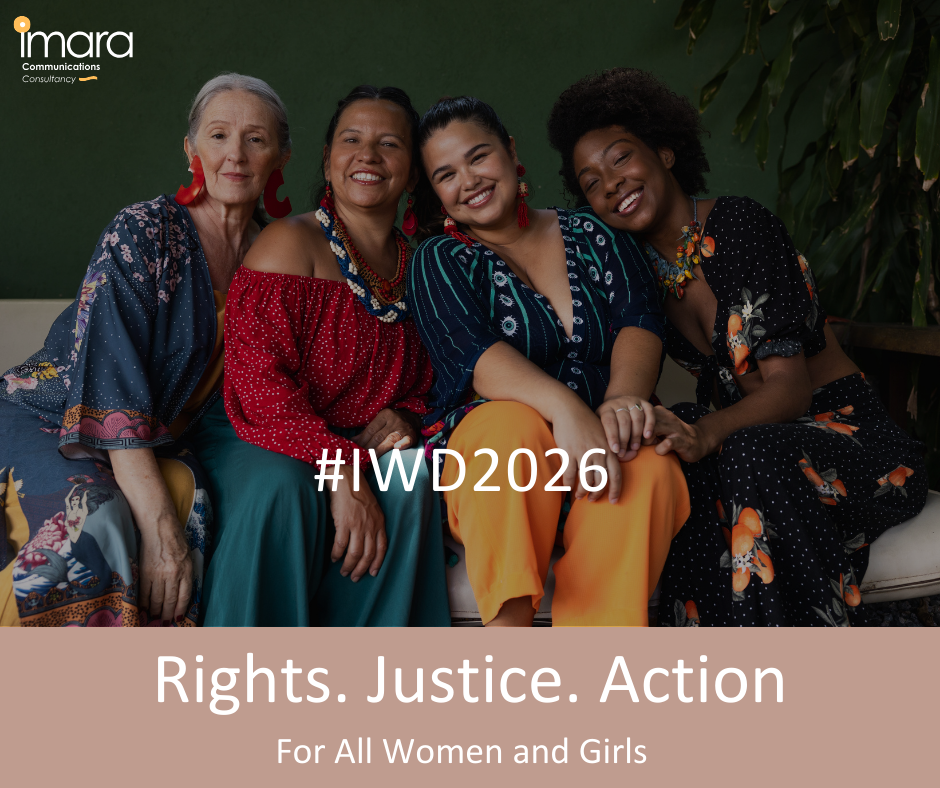
The theme for International Women’s Day 2026, “Rights. Justice. Action. For ALL Women and Girls,” is a reminder that rights alone are not enough. They must be backed by justice systems that work in practice and by deliberate action to remove the barriers that prevent women and girls from exercising those rights. In Zimbabwe, this theme highlights a critical issue that continues to undermine gender equality: women’s access to justice.
Zimbabwe has a progressive legal framework that recognises and protects women’s rights. The Constitution guarantees equality before the law and explicitly prohibits gender‑based discrimination. Sections 56 and 80 affirm women’s rights to equal protection and benefits under the law. Yet, as the theme focuses, rights on paper do not automatically translate into justice in real life. For many women, particularly those who are economically disadvantaged, living in rural areas, or marginalised, access to justice remains limited and uneven.
Financial barriers are among the most significant obstacles. Legal fees, court costs, and transport expenses frequently place the justice system beyond reach. Women in rural communities face additional challenges, including distance from courts, limited access to legal institutions, and a lack of clear, accessible information about legal procedures. Many women are unaware of the services available to them or how to pursue or access them, leaving constitutional rights largely theoretical.
Although progress has been made towards gender parity in the justice sector, women remain underrepresented in key decision‑making roles. Women currently make up est. 44.7% of judges, reflecting important gains while also highlighting that equality within justice institutions is yet to be fully achieved. Representation matters not only for fairness, but for public confidence in the justice system and for ensuring outcomes that are responsive to women’s lived realities.
The impact of these systemic barriers becomes most visible through lived experience. Fungai’s story (all names changed) reflects a reality faced by many Zimbabwean women. Fungai was in a relationship with Charles, unaware that he was married. During a visit to her home, Charles’s wife, Peggy, arrived unexpectedly and confronted her, resulting in a physical altercation.
Weeks later, Peggy filed a legal claim against Fungai through her lawyers, demanding USD 800 in damages and legal fees. Faced with the prospect of legal proceedings, Fungai felt overwhelmed. She lacked the financial resources to secure legal representation and had limited understanding of the legal process. Intimidated and unsure of her options, she did not attend the scheduled meeting.
Eventually, Charles intervened, persuading his wife to withdraw the case and offering to pay the demanded amount himself. The dispute ended without a court hearing. While the matter was resolved informally, it raises critical questions that echo the call for justice and action.
How many women understand the legal processes available to them?
How many can afford to pursue justice when disputes arise?
And how often do financial power and legal knowledge determine outcomes?
Fungai’s experience demonstrates that justice is shaped not only by laws but by the ability to navigate and afford legal systems. When access to justice depends on financial resources and legal literacy, justice risks becoming a privilege rather than a right. This reality stands in direct contradiction to the promise of equal justice for all women and girls.
According to the World Bank’s 2026 report, women and girls have just 64 per cent of the legal rights of men. Moreover, research consistently shows that limited legal literacy, inadequate access to legal aid, and financial constraints discourage many women from seeking formal legal remedies. For marginalised groups, including women with disabilities, these challenges are even more pronounced. Systemic barriers, inaccessible legal information, and weak support structures continue to widen the gap between rights guaranteed by law and justice experienced in everyday life.
The theme emphasises that rights must be enforced, justice must be accessible, and action must be taken. Access to justice lies at the intersection of these three pillars. Rights require awareness and the ability to claim them. Justice demands systems that are affordable, responsive, and free from bias. Action requires sustained investment in legal aid, legal education, and institutional reform.
Strengthening women’s access to justice is therefore central to advancing gender equality. Expanding legal literacy among women and girls is a critical starting point. Community‑based legal education initiatives can equip women with the knowledge needed to make informed decisions and engage confidently with the justice system.
Equally important is expanding affordable, accessible legal aid services. The high cost of legal representation remains one of the most significant barriers preventing women from seeking justice. Strengthening legal aid, particularly in rural and marginalised communities, can help ensure that financial constraints do not determine who can defend their rights.
Justice institutions must also continue to promote gender balance and gender-responsive practices. Increasing women’s representation as judges, magistrates, prosecutors, and legal practitioners contributes to more inclusive institutions. At the same time, justice processes must be simplified, accessible, and safe, enabling women to seek justice without fear of stigma, retaliation, or intimidation.
Strong partnerships between government, civil society organisations, and community leaders are essential to translating rights into justice and justice into action. Empowerment cannot exist without accountability, and equality cannot be achieved if women cannot claim and defend their rights.
As Zimbabwe marks International Women’s Day 2026 under the theme “Rights. Justice. Action. For ALL Women and Girls,” a critical question remains: are women truly empowered if justice remains out of reach? Ensuring fair, affordable, and effective access to justice for all women and girls is not only a legal obligation but a necessary step toward meaningful equality. Bridging the gap between legal guarantees and lived realities requires sustained commitment and deliberate action. Only then can justice become a lived reality for all women and girls.
This is true. Women in an African society have limited access to legal counsel due to all the reasons mentioned above. This mostly affects women in remote areas. If all events were to be bared, a lot of rapists are roaming freely in our villages because they are not being reported! Again in rural areas the aspect of communalism is overshadowing the legal part especially for women. Girls are raped by uncles or a family member and it’s being swept under the rug all in the name of “kugarisana”. Sometimes it’s about being ashamed of the incident which bring about the issue of injustice in these rural communities. I am talking about the events I witnessed in villages. One major factor is ignorance! People don’t know about their legal rights! A lot of people are in the dark. They are intimidated and they let things be. So a lot of enlightenment is needed for these women to stand up and exercise their rights!
There is a need for awareness raising and referral pathways at the grassroots level. The back-and-forth in the processes is financially and emotionally taxing.
Where is the man and boy in all of this🤷🏾♀️