
18. March 2026
Right. Justice. Action. For All Women and Girls
Economic Justice is Another Missing Link to Women’s Rights in Zimbabwe
By Getrude Chigerwe
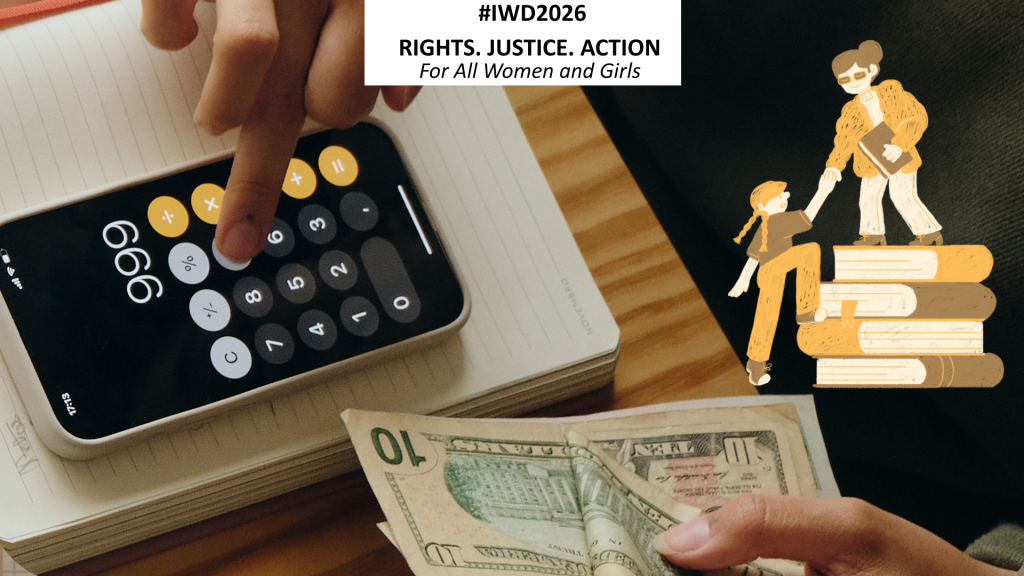
Legal rights are essential, but true equality requires fair access to economic opportunities, financial resources, and markets for women. The World Bank’s Women, Business and the Law 2026 report shows women have less than two-thirds of the legal rights men enjoy in economic participation, demonstrating persistent structural barriers. Only about 4% of women live in economies with near full legal equality, highlighting the global gap in gender parity. In Zimbabwe, this issue is especially relevant due to women’s central role in the informal economy.

Across the country, markets such as Epworth, Umzingwane, Chesvingo, and Mbare illustrate how women sustain Zimbabwe’s local economy. From vegetable vendors and clothing traders to cross‑border entrepreneurs and small‑scale producers, women dominate these trading spaces. Their businesses support households, pay school fees, and sustain entire communities. In many ways, these markets showcase women’s resilience and entrepreneurial spirit.
These markets also reveal structural challenges women face. Informal traders often lack adequate infrastructure, social protection, and affordable financial services. Despite this, the sector’s importance is undeniable. Research shows that women make up a large share of informal workers in developing countries, reflecting both their economic role and limited opportunities in the formal sector. This mirrors global trends where legal protections and economic systems often fail to fully support women’s economic participation.
Recognising these challenges, the Government of Zimbabwe and international partners, including the United Nations, have launched programmes to boost women’s economic participation. Initiatives to improve market infrastructure, support women traders, and enhance financial inclusion have reached several communities. These efforts reaffirm that informal markets like Epworth and Mbare are vital economic hubs needing sustained investment and policy attention. However, the scale and coordination of these interventions remain inadequate given the extent of women’s economic exclusion.
A major barrier for women is access to capital and business opportunities. Many lack the collateral that traditional financial institutions require, stopping access to loans needed to grow their businesses. This issue extends beyond Zimbabwe. According to the World Bank report, in 91 of 190 economies, laws do not explicitly ban discrimination against women in credit access, limiting their ability to scale up. To address this, the Zimbabwe Women’s Microfinance Bank supports women excluded from mainstream banking, especially in underserved and rural areas, by offering loans, savings, and financial literacy programmes.
To advance these efforts, Zimbabwe must strengthen gender-responsive financial inclusion. This involves expanding and properly funding women-focused financial institutions and requiring mainstream banks to offer lending products tailored to informal and women-owned enterprises. Without reforming access to capital and assessment, women will remain confined to low-growth economic activities despite their entrepreneurial potential.
Civil society organisations also play a vital role in overcoming non-financial barriers women face. Groups like Concord for Young Women in Business Global bridge knowledge and opportunity gaps through mentorship, skills development, and networking. These efforts acknowledge that economic exclusion involves limited access to information, markets, and networks, not just finances. Expanding such capacity-building through government and private sector partnerships would enhance women’s ability to build sustainable enterprises and move into higher-value activities.
Another major opportunity for women entrepreneurs lies beyond Zimbabwe’s borders. The African Continental Free Trade Area (AfCFTA) offers unprecedented potential for small and medium‑sized enterprises to access regional markets by creating a single African market for goods and services. However, for many women operating in informal markets, the benefits of this framework remain largely untapped.
A major constraint is limited access to information and trade-related skills. Many women traders lack the knowledge to navigate regional trade systems, understand rules of origin, or access export opportunities under AfCFTA. Without targeted support, regional integration may reinforce existing inequalities. Closing this gap requires gender-responsive trade policies, including simplified trade information, targeted training, and better access to trade finance and export support. Capacity-building is essential for women-owned businesses to engage meaningfully in regional and continental markets.
To achieve economic justice, it is necessary to integrate women’s economic empowerment into national development planning. This involves expanding access to finance, investing in infrastructure and social protection in informal markets, and providing women with the information and training needed to benefit from regional trade. Improving data collection on women in the informal economy is also vital for evidence-based policymaking and for tracking progress. Recognising informal women traders as legitimate economic actors is fundamental to inclusive growth.
The economic case for such reforms is compelling. Studies cited by the World Bank indicate that reducing gender gaps in labour force participation could increase GDP by 15-20 per cent in many economies. Empowering women economically is therefore not only a matter of fairness but also a strategic investment in national development and economic resilience.
Ultimately, economic justice is not merely an economic issue; it is a fundamental women’s rights issue. When women have equal access to capital, markets, and economic decision‑making, they are better positioned to shape their futures and contribute meaningfully to national development. As Zimbabwe joins the world during this International Women’s Month under the theme “Rights, Justice, Action. For All Women and Girls”, prioritising economic justice for women must remain central to the country’s efforts to achieve genuine and lasting equality.
🙏🏾👌🏾
Hey Getrude, Nice work
Thank you so much Greyson.