
25. March 2026
Water and Gender: Water Scarcity, a Crisis with a Gender Face.
By Getrude Chigerwe
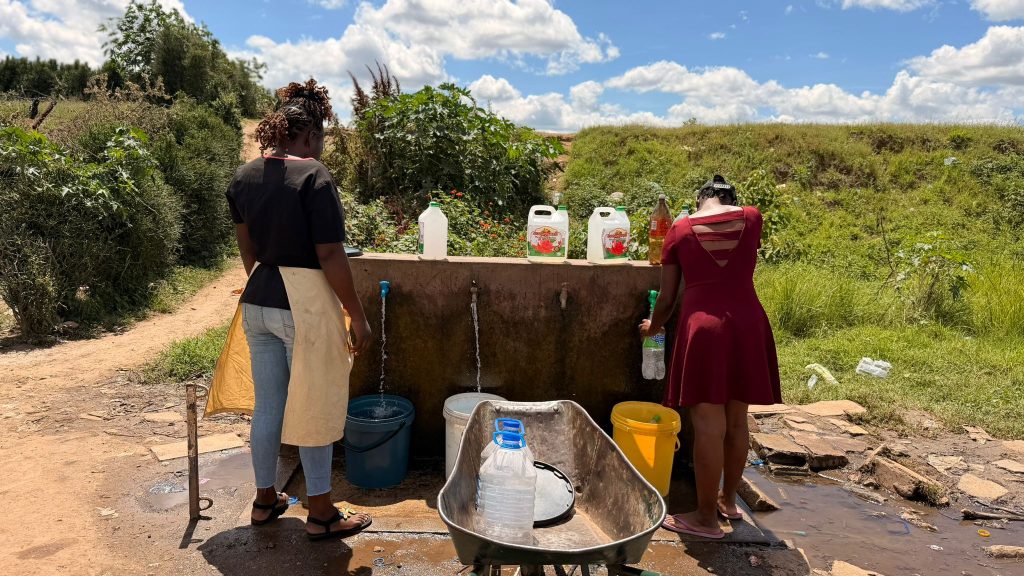
Photography: Getrude Chigerwe/ Imara Communications
For millions of women and girls globally, the daily search for water is not an abstract development challenge, it is a quiet, relentless struggle that shapes their lives, limits their choices, and undermines their rights. As the world marked World Water Day on the 22nd of March, under the 2026 theme, “Water and Gender,” it is clear that water scarcity is far more than an environmental concern. It is a gender justice issue that deepens inequality, robs women and girls of time and opportunity, and reinforces cycles of poverty. This reality is equally visible in Zimbabwe, where access to water continues to determine who learns, who earns, and who bears the heaviest burden of water scarcity.
Across the world, water scarcity disproportionately affects women. UN and The Guardian reports indicate that women and girls are responsible for water collection in 70% of households without piped water, spending hours daily on this task. This unpaid labour comes at a high cost. It reduces time for education, income generation, and rest, reinforcing cycles of poverty and inequality. As a result, an estimated 10 million girls miss out on school due to inadequate access to water and sanitation.
Despite carrying this burden, women remain largely excluded from decision-making processes. According to the United Nations University 2025 report, in Africa, only 17% of water ministry leadership roles are held by women. This imbalance reflects a broader injustice: those most affected by water scarcity often have the least influence over its governance.
SDG6 Snapshot and UNICEF Zimbabwe reports indicate that in Zimbabwe, the water crisis is both visible and deeply gendered. Only 25% of the population has access to safely managed drinking water, while 64% rely on basic services that are often unreliable or unsafe. Rural communities face the greatest challenges due to limited infrastructure and climate pressures.
For many women, this translates into hours of daily labour. UNDP and Zim Situation Now reports show that women and children can spend 8–9 hours waiting at boreholes or walk up to 25 kilometres to access water. According to RSI International, on average, women spend up to four hours each day collecting water.
The impact is profound. Girls are frequently forced to miss school or drop out entirely to assist with water collection, particularly in rural areas. Limited access to clean water also fuels outbreaks of diseases such as cholera and typhoid, increasing caregiving responsibilities that fall overwhelmingly on women. Climate change is intensifying these challenges. Droughts and erratic rainfall, worsened by recent El Niño conditions, have reduced water availability and placed additional strain on already fragile water systems.
In response, the Government of Zimbabwe has taken steps to improve access to water, particularly for women and girls. Investments in major infrastructure projects such as the Gwayi-Shangani and Kunzvi dams, alongside expanded rural borehole programmes and solar-powered water systems, aim to increase water availability and reliability. These efforts have been strengthened through partnerships with organisations including the World Bank, UNICEF and the African Development Bank, which have supported water system rehabilitation, sanitation improvements and climate-resilient initiatives.
At the community level, boreholes and piped water schemes are easing the burden on women, reducing the time spent fetching water and improving access to education, economic opportunities, and health outcomes. While significant challenges remain, these initiatives reflect a growing recognition that access to water is central to both gender equality and community development.
The daily reality for many women remains harsh. As primary caregivers responsible for cooking, cleaning, childcare, and small-scale farming, women depend heavily on reliable access to water. When water is scarce, these responsibilities become more time-consuming and physically demanding, undermining household well-being, food security and income. Girls, meanwhile, face stigma, discomfort, and increased absenteeism from school due to inadequate water for menstrual hygiene.
The evidence is clear: water scarcity is not gender-neutral. It systematically disadvantages women and girls, limiting their access to education, healthcare, safety and economic participation. As the world commemorates International Women’s Month under the theme “Rights, Justice, Action for all women and girls,” water emerges as one of the defining issues. In Zimbabwe, deeply rooted cultural norms and structural inequalities mean that women and girls continue to bear the heaviest burden of water scarcity.
Ensuring access to water is therefore about more than infrastructure. It is about restoring time, dignity, opportunity and voice to women and girls, and turning commitments to gender equality into a lived reality.
Come to Epworth n see the chaos thats at boreholes. Vakadzi vakutoenda masikati coz kuseni n evening pressure ma1.
Interesting, and it is true what limited access to water can do to women and girls. Inini, I grew up in Glen Norah A, Specimen. Water was such a hustle, pa tape chaipo yaibuda once a week and sometimes nothing at all and the whole ward used to rely on one borehole yakaiswa ne Church of Christ. I remember the borehole raisvika pakusabuda mvura because of overpumping and the water table going down, nenyaya yekuwandirwa. We would go to fetch water at midnight, that was when the queue was better, waisashaya vanhu anytime you go but midnight zvinenge zvava nane. Now imagine, as a 14-15-year-old girl, uchinotsvaga mvura midnight. Vana vakawanda vaikaita nhumbu, besides their safety and well-being being compromised. When I left Zim, water was still a problem around that area. Recently, vanhu vakazobatanidza mari havo vakacheresa ma community boreholes that connect pipes to households, and it has eased the situation. The only challenge now is that the boreholes are solar powered, so there is a risk of solars being stolen and also in winter, the solar system can be erratic, but it's a small issue, it can't be compared to the situation prior.
Ku Unit O ku Chitungwiza inodzoka usiku ka1 pagore tatongojaira mugodhi